Live Chat +91-9625961599

Best Divorce Lawyer in Delhi

Over 20 years of experience in handling divorce and matrimonial disputes.

Get A Free Consultation

A divorce can be overwhelming emotionally, mentally and legally. You require support and advice from a professional.

For comprehensive legal support and guidance, you should choose the most suitable divorce lawyer in Delhi.

At Legals365, we know what you go through and, just as fully, we provide accurate and expert legal support from start to finish. Our firm is here to help you, whether your case is simple or complex, whether it is mutual or contested, to get you over the hurdle and move forward.

Protect Your Rights & Future - Trusted Divorce Lawyer in Delhi

Tax incidence is not a legal matter, it happens as a very personal journey. However, if you have a trusted divorce lawyer in Delhi NCR, your interests will be safeguarded and your future secured. All types of divorce matters are a speciality of the expert lawyers at Legals365, who are always focused on fairness, compassion and professionalism.

In addition, we work with our clients to help them understand their rights, their options and the best legal strategy for them. If you are looking for the best divorce lawyer in Delhi, then we have established our name based on the foundation of integrity, expertise and client satisfaction.

Chat on WhatsApp +91-9625961599
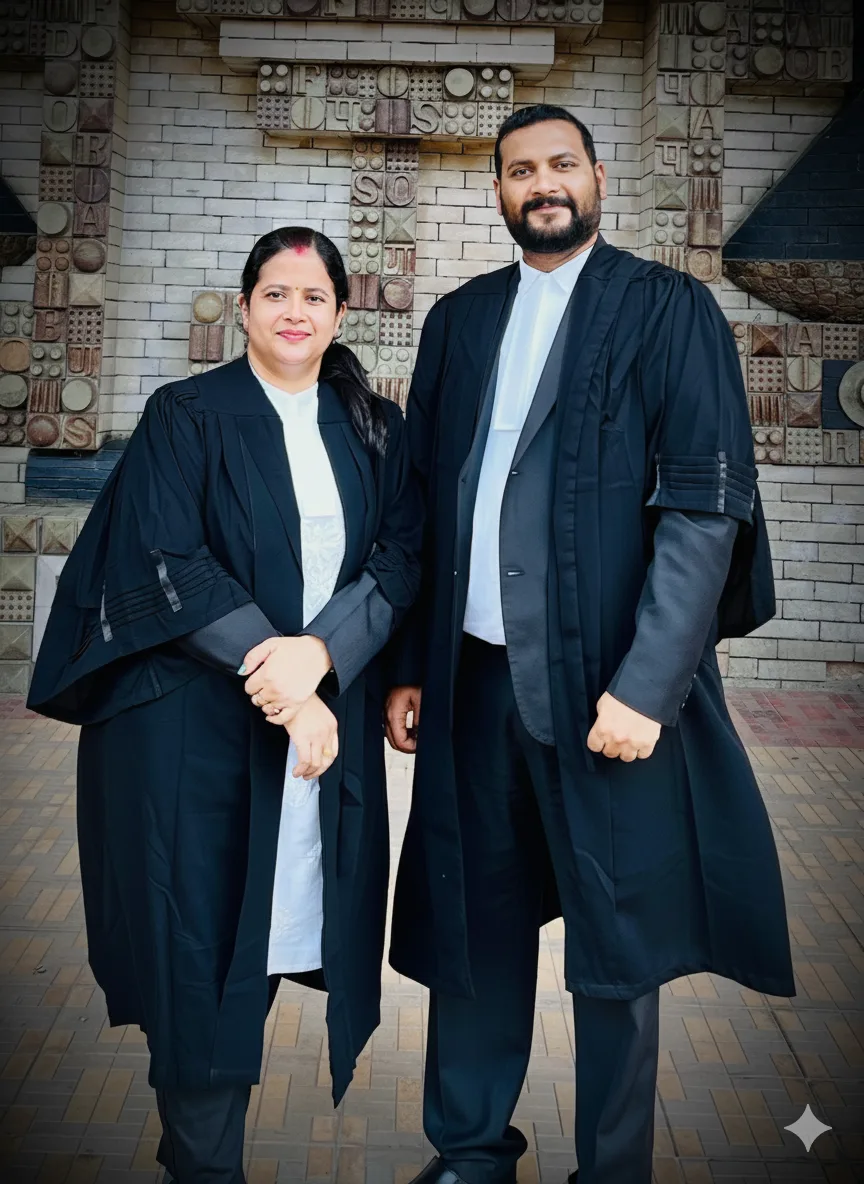
Divorce Lawyer in Delhi
Divorce Lawyer in Delhi Divorce Lawyer in Faridabad Divorce Lawyer in Ghaziabad Divorce Lawyer in Greater Noida Divorce Lawyer in Gurugram Divorce Lawyer in Noida Divorce Lawyer in Dwarka Divorce Lawyer in Rohini Divorce Lawyer in Patiala House Divorce Lawyer in Karkardooma Divorce Lawyer in Surajpur

Courts:

Divorce under the Hindu Marriage Act, 1955

Under The Hindu Marriage Act, 1955, provides a legal framework for Hindus, Buddhists, Jains, and Sikhs to dissolve a marriage. It allows for both fault-based and mutual consent divorces under Section 13, offering protection especially for women and enabling divorce based on various legal grounds.
The Act also includes special security for women, allows wives to divorce if the husband is guilty of rape, sodomy or bestness. The process begins in the family court.

Grounds for divorce:

Under Section 13 of the Hindu Marriage Act, 1955, either spouse can petition for divorce on various grounds, including:

  • Adultery: Voluntary intercourse with anyone other than a spouse.
  • Cruelty: Physical or mental loss by spouse.
  • Desertion: Abandonment without an appropriate reason for at least two years.
  • Conversion: The spouses stop being Hindus by converting to another religion.
  • Mental Disorder:The spouse is incompatible with the unhealthy mind or suffers from a mental disorder that makes cohabitation unfair.
  • Leprosy: The spouse suffers from a viral and incurable form of leprosy.
  • Venereal Disease: The husband or wife is suffering from a communicable venereal disease.
  • Renunciation: The spouse has abandoned the world by entering the religious order.
  • Estimation of Death:The spouse has not been heard of as surviving for seven years.

Process:

  • Petition to file: The victim party filed a divorce petition in the family court, which has jurisdiction.
  • Service of notice: The court provides notice to another husband or wife.
  • Response: The defendant files a written statement.
  • Evidence and hearing: Both sides present evidence and are heard.
  • Decree: If the grounds are proved, the court provides a decree of divorce.

Divorce under the Special Marriage Act, 1954

Under the Special Marriage Act, 1954, marriage disintegration is controlled for all Indian citizens, including interfaith and civil marriages. This secular law allows both defect-based and mutual consent divorce. Unlike individual laws, SMA applies equally regardless of religion, but excludes grounds such as religious conversion or renunciation found in the Hindu Marriage Act. This process starts in the district court, where reconciliation can be made before issuing the decree.

Section 27 of the Special Marriage Act, 1954, either allows the spouse to divorce in such a way:

  • Adultery: The spouses are engaged in voluntary intercourse outside the marriage.
  • Cruelty: The spouse has cruelly treated the petitioner.
  • Desertion: The spouse has left the petitioner for at least two years.
  • Imprisonment: The husband or wife has been sentenced to imprisonment for seven years or more.
  • Mental disorder: The spouse is of an unhealthy mind or suffering from a mental disorder.
  • Venereal Disease: The husband or wife is suffering from a communicable veneer disease.
  • Presumption of death: The spouse has not been heard of as surviving for seven years.

Section 28 provides for divorce by mutual consent; it requires:

  • This couple has been living separately for at least one year.
  • They have mutually recommended to dissolve the marriage.

After filing a joint petition, there is a six-month waiting period before the court decree.

Process:

  • Petition to file: Either husband or wife (or both, in mutual consent) files a divorce petition in the district court.
  • Service of notice: The court provides notice to another husband or wife.
  • Response: The defendant files a written statement.
  • Evidence and hearing: Both sides present evidence and are heard.
  • Decree: If the base is proved, the court grants a DI

Constitutional Rights During Divorce - Know Your Legal Protections

There are powerful constitutional rights that many people going through a divorce don't realise are protected by. These rights offer legal protection, fairness, and personal safety during the divorce process. Before getting a divorce lawyer in Delhi or not, you all need to be aware of things that are in your favour. It helps you to be able to legally and emotionally protect yourself during this very life transition.

Article 14 - Right to Equality Before Law

Article 14 makes sure that every individual is subject to the law equally. What this means is that in divorce proceedings, the gender, the income or the status of the spouses does not matter, as all the spouses are legally equal.

Article 21 - Right to Life & Personal Liberty

Article 21 protects you to lead your life with dignity, freedom, and safety. In particular, there is a lot to appreciate if, for example, you are already harassed, emotionally manipulated or threatened by your spouse while going through divorce; and this matters all the more when your opponent has substantial resources.

Right Against Domestic Violence - Protection of Women Under DV Act, 2005

As per the Protection of Women from Domestic Violence Act, 2005, one has the right to live free from any sort of abuse, such as physical, verbal, emotional and financial. Unfortunately, most women do go through domestic abuse before and during the divorce.

Article 32 - Constitutional Remedy in High Court/Supreme Court

Article 32 permits you to go to the High Court or Supreme Court in the event your rights are not respected by lower courts or if justice is delayed. It is a very good legal tool for those whose fundamental rights are violated during the process of divorce.

Frequently Asked Questions

A divorce case is usually filed before the Family Court having jurisdiction where the marriage was solemnised, where the couple last lived together, or where the respondent resides. You file a petition under the applicable personal law with basic documents, affidavit, and court fees, and the court then issues notice and starts proceedings.

Mutual divorce happens when both spouses jointly agree to end the marriage and file together under provisions like Section 13B of the Hindu Marriage Act or Section 28 of the Special Marriage Act. Contested divorce is filed by one spouse on legal grounds such as cruelty, desertion, or adultery, and the other spouse opposes it.

Mutual consent divorce can be quicker, but it still usually involves statutory steps and court dates; the six-month waiting period may be waived in appropriate cases by the court. Contested divorce often takes much longer because evidence, cross-examination, and multiple hearings are involved.

Courts commonly require the marriage certificate or proof of marriage, identity and address proof, photographs, and documents supporting the grounds taken in the petition. In cases involving children, income, maintenance, or property, papers relating to children, earnings, bank records, and assets are also commonly filed.

Indian law does not fix one standard percentage for alimony; the court decides it after looking at income, assets, needs, lifestyle, liabilities, and the facts of the marriage. Interim and permanent maintenance can be sought under provisions such as Sections 24 and 25 of the Hindu Marriage Act, besides other maintenance laws where applicable.

No, alimony is not automatic in every divorce case, because the court grants it only when a spouse proves legal need and the facts justify maintenance. If both spouses are financially independent or the court finds no entitlement on the facts, alimony may be refused or reduced.

Yes, a spouse can file a contested divorce without the other spouse's consent if valid legal grounds exist under the applicable marriage law. Mutual consent is required only in a mutual divorce petition, not in a contested divorce case.

Indian courts decide child custody on the welfare of the child, not on any automatic right of the mother or father. The court can consider age, needs, safety, schooling, parental capacity, and even the child's preference if the child is mature enough

The grounds depend on the law governing the marriage, but commonly include cruelty, adultery, desertion, conversion, mental disorder, venereal disease in some statutes, renunciation, and presumption of death. Mutual consent divorce is separately recognised under major statutes such as the Hindu Marriage Act and the Special Marriage Act.

There is no fixed all-India legal fee for divorce matters, because fees depend on the city, lawyer's experience, complexity of issues, number of hearings, and whether the case is mutual or contested. Court fees and drafting, filing, evidence, and appearance costs may also be charged separately.

In many places, e-filing facilities exist through the e-Courts system, so petitions and documents may be filed online where that court has adopted the service. However, divorce in India is not fully online everywhere, and personal appearance, mediation, or evidence may still be required by the court.

If a party does not appear despite service of notice, the court may proceed ex parte and decide the case on the available record. The absent party can later try to set aside the ex parte order, but only by following the proper legal process and showing sufficient cause.

Indian divorce law does not create a universal automatic 50-50 split of all property after divorce. Courts usually examine title, ownership, contribution, and specific claims, while Section 27 of the Hindu Marriage Act specifically allows orders regarding property presented at or about marriage that belongs jointly to both spouses.

Yes, NRI couples can file for divorce in India if the Indian court has jurisdiction under the applicable marriage law and the facts of residence or marriage support that filing. Jurisdiction usually depends on factors like where the marriage took place, where the parties last lived together, or where the respondent resides.

The fastest regular court route is usually mutual consent divorce, because both spouses agree on separation and settlement terms. Even then, the statutory process must be followed, though courts can waive the cooling-off period in suitable cases instead of treating it as mandatory.