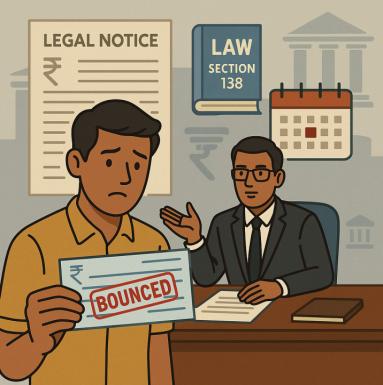
What Steps Should I Take Immediately After a Cheque is Dishonored in India?
If you receive a dishonoured cheque, also known as a "cheque bounce," it can be a very stressful and frustrating experience for both individuals and businesses. Not only does it mess up cash flow, but it also has legal consequences for both the drawer (the person who wrote the cheque) and the payee (the person who is supposed to get the money).
The Negotiable Instruments Act of 1881, specifically Section 138, outlines the legal process and rights for the person wronged in India when a cheque bounces. If you've gotten a bad cheque, you need to act quickly and correctly to protect your money and your legal rights. We will go over each step you need to take right away after a cheque is dishonoured.
The Negotiable Instruments Act of 1881, specifically Section 138, outlines the legal process and rights for the person wronged in India when a cheque bounces. If you've gotten a bad cheque, you need to act quickly and correctly to protect your money and your legal rights. We will go over each step you need to take right away after a cheque is dishonoured.
1. Know Why It Was Dishonoured
First, review the reason provided in the bank's return memo that accompanies the bounced cheque. The most common reasons are:
Not enough money in the drawer's account
Signature doesn't match
Account closed
Early presentation of a post-dated cheque
The amount written in words and numbers doesn't match.
Changes to the cheque
Why it matters:
Section 138 does not allow for criminal prosecution for all bounced checks. Section 138 only applies to checks that were not honoured because they were "insufficient funds" or "exceeds arrangement."
2. Keep evidence and paperwork safe
Keep the following documents right away:
The original cheque that was not honoured
The bank's "Cheque Return Memo" explains why the cheque was not honoured.
Any communication with the drawer, like emails, messages or letters about the cheque
Why it matters: If you need to go to court later, these papers are very important proof. You will also need them to write a legal notice.
3. Tell the Drawer (Not Required, but Helpful)
Even though it's not required by law, letting the person who wrote the cheque (the drawer) know about the dishonor—by calling, texting, or emailing them politely—can sometimes help things get settled quickly. The drawer could fix the problem by sending the money, writing a new cheque or offering another way to pay.
Why it matters: This step can help keep business or personal relationships strong and sometimes settle the issue without taking any further action.
4. If necessary, deposit the cheque again.
If the cheque is still valid (usually three months from the date on the cheque), the law lets you present it again.
You can deposit the cheque again if you think the drawer's account now has enough money or if the problem was a technical mistake.
You can still take legal action if it bounces again.
Why it matters: Re-depositing could lead to a successful payment without going to court.
5. Send the drawer a legal notice
If the cheque isn't honoured after you've tried to fix the problem, you need to take the most important legal step: send the drawer a legal demand notice.
You have 30 days from the day you get the bank's cheque return memo to send the legal notice.
The notice should make it clear:
Details about the cheque and why it was not honoured
The amount owed
A request for payment within 15 days of getting the notice
Why it matters:
Section 138 says that sending a legal notice is a required step. You can't file a criminal complaint in court without it.
6. Wait for the 15-Day Statutory Period
After you send the legal notice, give the drawer 15 days to pay.
If the payment is made during this time, the issue is settled.
If not, you can move on to the next step.
Why it matters: The 15-day period is required by law and gives the drawer a fair chance to settle the issue.
7. Get ready to file a criminal complaint under Section 138
You can file a criminal complaint under Section 138 of the Negotiable Instruments Act if the drawer doesn't pay within 15 days.
You have 30 days after the 15-day notice period ends to file the complaint.
The complaint is filed with the Judicial Magistrate or Metropolitan Magistrate in the area where the cheque was cashed.
Documents needed to file the case:
Original cheque that was not honoured
Memo for the bank return
A copy of the legal notice and proof that it was received
Proof of sending the notice is a postal or courier receipt.
Any message you send to the drawer
Why it matters:
It's very important to file the complaint on time. If you wait too long to file, your case may be thrown out.
8. Get Help from a Lawyer
There are strict deadlines, legal language, and careful paperwork to follow when dealing with bounced cheque. It's a good idea to talk to a qualified cheque bounce lawyer or law firm, like Legals 365 or Advocate BK Singh, who can:
Write the legal notice in a professional way
Give you advice on your legal options
File the case in court and take care of it
Be your lawyer in court and during negotiations to settle.
9. Think about settlement or another way to resolve the dispute.
The drawer and payee can still settle the matter outside of court even after legal action has started. Courts like these kinds of settlements and may throw out the case if both sides agree and the money is paid.
10. Keep in touch and stay up to date
It can take a long time for legal matters to be resolved. Keep in touch with your lawyer, keep track of how your case is going, and keep records of all payments and correspondence related to the case.
The end
In India, a bounced cheque can not only hurt your finances, but it can also have serious legal consequences. The best way to protect your rights and interests is to act quickly and follow the right legal steps. Every step is important, from keeping evidence to sending a timely legal notice and, if necessary, filing a complaint under Section 138.
Getting professional legal advice from people like Legals 365 and Advocate BK Singh makes sure you don't miss any deadlines and that your case is presented well. Keep in mind that taking quick action and keeping good records are the best ways to quickly and effectively deal with bounced cheque.
How Legals 365 and Advocate BK Singh Can Help You After a cheque Bounces
It can be hard to deal with a bounced cheque, especially when Indian law has strict deadlines and rules. This is where Legals 365 and Advocate BK Singh come in. They offer expert, quick, and personalised legal help at every step of the way.
1. Quick Case Evaluation
As soon as you get in touch with Legals 365, their legal team, led by the experienced Advocate BK Singh, will look over the details of your case and the documents you sent them (like the bounced cheque and return memo). They will quickly look into whether your case falls under Section 138 and tell you what the best thing to do is.
2. Writing professional legal notices
Sending a proper legal notice is one of the most important things to do after a cheque bounces. Legals 365 will write a clear, legally correct notice that fits your needs and make sure it gets to the drawer within the 30-day time frame. Advocate BK Singh's knowledge makes sure that your notice is strong and raises the chances of getting paid right away or reaching a good settlement.
3. Keeping track of documents and evidence
Legals 365 helps you keep track of and store all of your important papers, such as the original cheque, the return memo, correspondence with the drawer, and proof that the notice was sent. This careful record-keeping makes your case stronger if it goes to court.
4. Advice on strategy and negotiation
Advocate BK Singh is known for his strategic way of doing things. He will help you negotiate, talk to the drawer on your behalf, and work towards a quick and fair resolution whenever possible, whether your goal is to get your money back quickly or to take legal action.
5. How to File and Represent Your Section 138 Complaint
If the drawer doesn't respond positively, Legals 365 and Advocate BK Singh will quickly prepare and file your Section 138 criminal complaint, making sure that all legal deadlines are met. Advocate BK Singh will personally represent you in court, make a strong case for you, and take care of all the legal details.
6. Regular updates and clear communication
Legals 365 keeps you up to date on every step of the process, from sending the legal notice to court proceedings and possible settlements, so you always know what's going on with your case.
7. Help all over India
Legals 365 and Advocate BK Singh can help you no matter where you are in India, whether you're in Delhi, Noida, Gurgaon, Ghaziabad, or any other city. They offer both in-person and online consultations.
Final Thoughts
When you work with Legals 365 and Advocate BK Singh, you get a legal partner who puts your needs first, acts quickly, and knows a lot about cheque bounce cases. They will handle your case in a way that gives you the best chance of getting better and protects your rights under Indian law. Don't wait if you have a dishonoured cheque. Call Legals 365 and Advocate BK Singh right away for fast, effective legal help.
What to do if your cheque is dishonoured in India
1. What should I do first if my cheque is not honoured?
As soon as possible, get the returned cheque and the bank's return memo. Check the reason for dishonour. Section 138 of the Negotiable Instruments Act only covers certain reasons, like not having enough money.
2. Do you need to keep the original cheque and bank memo?
Yes, the original cheque and the bank's return memo are very important pieces of evidence if you decide to go to court.
3. Can I give the cheque again after it has been dishonoured?
If you think the problem that caused the dishonour has been fixed, you can present the cheque again (within its validity period, which is usually three months).
4. Should I let the person who wrote the cheque know after it has been dishonoured?
It's a good idea to tell the drawer (issuer) that the cheque was not honoured. Sometimes the problem can be solved without going to court.
5. When should I send a legal notice to the person who wrote the cheque?
If the cheque is bounced because there isn't enough money, send a legal notice within 30 days of getting the return memo, asking for payment within 15 days.
6. What happens if the drawer doesn't pay after getting the notice?
You can file a criminal complaint under Section 138 within the next 30 days if the drawer doesn't pay within 15 days of getting the notice.
7. What papers do I need to file a case for a bounced cheque?
You will need the original cheque, the return memo, a copy of the legal notice, proof that the notice was delivered, and all other relevant letters.
8. Do I need to talk to a lawyer about bounced cheque?
Yes, hiring a lawyer or a company like Legals 365 or Advocate BK Singh makes sure that your notice and complaint are written correctly and that all deadlines are met.
9. Is it possible to settle the case after filing it?
Yes, you can settle at any time. You can drop the case or have it compounded in court if the drawer pays the amount.
10. What could happen if I wait too long to do something?
If you wait longer than the deadlines, your legal position may get weaker or you may not be able to file a case under Section 138.
First, review the reason provided in the bank's return memo that accompanies the bounced cheque. The most common reasons are:
Not enough money in the drawer's account
Signature doesn't match
Account closed
Early presentation of a post-dated cheque
The amount written in words and numbers doesn't match.
Changes to the cheque
Why it matters:
Section 138 does not allow for criminal prosecution for all bounced checks. Section 138 only applies to checks that were not honoured because they were "insufficient funds" or "exceeds arrangement."
2. Keep evidence and paperwork safe
Keep the following documents right away:
The original cheque that was not honoured
The bank's "Cheque Return Memo" explains why the cheque was not honoured.
Any communication with the drawer, like emails, messages or letters about the cheque
Why it matters: If you need to go to court later, these papers are very important proof. You will also need them to write a legal notice.
3. Tell the Drawer (Not Required, but Helpful)
Even though it's not required by law, letting the person who wrote the cheque (the drawer) know about the dishonor—by calling, texting, or emailing them politely—can sometimes help things get settled quickly. The drawer could fix the problem by sending the money, writing a new cheque or offering another way to pay.
Why it matters: This step can help keep business or personal relationships strong and sometimes settle the issue without taking any further action.
4. If necessary, deposit the cheque again.
If the cheque is still valid (usually three months from the date on the cheque), the law lets you present it again.
You can deposit the cheque again if you think the drawer's account now has enough money or if the problem was a technical mistake.
You can still take legal action if it bounces again.
Why it matters: Re-depositing could lead to a successful payment without going to court.
5. Send the drawer a legal notice
If the cheque isn't honoured after you've tried to fix the problem, you need to take the most important legal step: send the drawer a legal demand notice.
You have 30 days from the day you get the bank's cheque return memo to send the legal notice.
The notice should make it clear:
Details about the cheque and why it was not honoured
The amount owed
A request for payment within 15 days of getting the notice
Why it matters:
Section 138 says that sending a legal notice is a required step. You can't file a criminal complaint in court without it.
6. Wait for the 15-Day Statutory Period
After you send the legal notice, give the drawer 15 days to pay.
If the payment is made during this time, the issue is settled.
If not, you can move on to the next step.
Why it matters: The 15-day period is required by law and gives the drawer a fair chance to settle the issue.
7. Get ready to file a criminal complaint under Section 138
You can file a criminal complaint under Section 138 of the Negotiable Instruments Act if the drawer doesn't pay within 15 days.
You have 30 days after the 15-day notice period ends to file the complaint.
The complaint is filed with the Judicial Magistrate or Metropolitan Magistrate in the area where the cheque was cashed.
Documents needed to file the case:
Original cheque that was not honoured
Memo for the bank return
A copy of the legal notice and proof that it was received
Proof of sending the notice is a postal or courier receipt.
Any message you send to the drawer
Why it matters:
It's very important to file the complaint on time. If you wait too long to file, your case may be thrown out.
8. Get Help from a Lawyer
There are strict deadlines, legal language, and careful paperwork to follow when dealing with bounced cheque. It's a good idea to talk to a qualified cheque bounce lawyer or law firm, like Legals 365 or Advocate BK Singh, who can:
Write the legal notice in a professional way
Give you advice on your legal options
File the case in court and take care of it
Be your lawyer in court and during negotiations to settle.
9. Think about settlement or another way to resolve the dispute.
The drawer and payee can still settle the matter outside of court even after legal action has started. Courts like these kinds of settlements and may throw out the case if both sides agree and the money is paid.
10. Keep in touch and stay up to date
It can take a long time for legal matters to be resolved. Keep in touch with your lawyer, keep track of how your case is going, and keep records of all payments and correspondence related to the case.
The end
In India, a bounced cheque can not only hurt your finances, but it can also have serious legal consequences. The best way to protect your rights and interests is to act quickly and follow the right legal steps. Every step is important, from keeping evidence to sending a timely legal notice and, if necessary, filing a complaint under Section 138.
Getting professional legal advice from people like Legals 365 and Advocate BK Singh makes sure you don't miss any deadlines and that your case is presented well. Keep in mind that taking quick action and keeping good records are the best ways to quickly and effectively deal with bounced cheque.
How Legals 365 and Advocate BK Singh Can Help You After a cheque Bounces
It can be hard to deal with a bounced cheque, especially when Indian law has strict deadlines and rules. This is where Legals 365 and Advocate BK Singh come in. They offer expert, quick, and personalised legal help at every step of the way.
1. Quick Case Evaluation
As soon as you get in touch with Legals 365, their legal team, led by the experienced Advocate BK Singh, will look over the details of your case and the documents you sent them (like the bounced cheque and return memo). They will quickly look into whether your case falls under Section 138 and tell you what the best thing to do is.
2. Writing professional legal notices
Sending a proper legal notice is one of the most important things to do after a cheque bounces. Legals 365 will write a clear, legally correct notice that fits your needs and make sure it gets to the drawer within the 30-day time frame. Advocate BK Singh's knowledge makes sure that your notice is strong and raises the chances of getting paid right away or reaching a good settlement.
3. Keeping track of documents and evidence
Legals 365 helps you keep track of and store all of your important papers, such as the original cheque, the return memo, correspondence with the drawer, and proof that the notice was sent. This careful record-keeping makes your case stronger if it goes to court.
4. Advice on strategy and negotiation
Advocate BK Singh is known for his strategic way of doing things. He will help you negotiate, talk to the drawer on your behalf, and work towards a quick and fair resolution whenever possible, whether your goal is to get your money back quickly or to take legal action.
5. How to File and Represent Your Section 138 Complaint
If the drawer doesn't respond positively, Legals 365 and Advocate BK Singh will quickly prepare and file your Section 138 criminal complaint, making sure that all legal deadlines are met. Advocate BK Singh will personally represent you in court, make a strong case for you, and take care of all the legal details.
6. Regular updates and clear communication
Legals 365 keeps you up to date on every step of the process, from sending the legal notice to court proceedings and possible settlements, so you always know what's going on with your case.
7. Help all over India
Legals 365 and Advocate BK Singh can help you no matter where you are in India, whether you're in Delhi, Noida, Gurgaon, Ghaziabad, or any other city. They offer both in-person and online consultations.
Final Thoughts
When you work with Legals 365 and Advocate BK Singh, you get a legal partner who puts your needs first, acts quickly, and knows a lot about cheque bounce cases. They will handle your case in a way that gives you the best chance of getting better and protects your rights under Indian law. Don't wait if you have a dishonoured cheque. Call Legals 365 and Advocate BK Singh right away for fast, effective legal help.
What to do if your cheque is dishonoured in India
1. What should I do first if my cheque is not honoured?
As soon as possible, get the returned cheque and the bank's return memo. Check the reason for dishonour. Section 138 of the Negotiable Instruments Act only covers certain reasons, like not having enough money.
2. Do you need to keep the original cheque and bank memo?
Yes, the original cheque and the bank's return memo are very important pieces of evidence if you decide to go to court.
3. Can I give the cheque again after it has been dishonoured?
If you think the problem that caused the dishonour has been fixed, you can present the cheque again (within its validity period, which is usually three months).
4. Should I let the person who wrote the cheque know after it has been dishonoured?
It's a good idea to tell the drawer (issuer) that the cheque was not honoured. Sometimes the problem can be solved without going to court.
5. When should I send a legal notice to the person who wrote the cheque?
If the cheque is bounced because there isn't enough money, send a legal notice within 30 days of getting the return memo, asking for payment within 15 days.
6. What happens if the drawer doesn't pay after getting the notice?
You can file a criminal complaint under Section 138 within the next 30 days if the drawer doesn't pay within 15 days of getting the notice.
7. What papers do I need to file a case for a bounced cheque?
You will need the original cheque, the return memo, a copy of the legal notice, proof that the notice was delivered, and all other relevant letters.
8. Do I need to talk to a lawyer about bounced cheque?
Yes, hiring a lawyer or a company like Legals 365 or Advocate BK Singh makes sure that your notice and complaint are written correctly and that all deadlines are met.
9. Is it possible to settle the case after filing it?
Yes, you can settle at any time. You can drop the case or have it compounded in court if the drawer pays the amount.
10. What could happen if I wait too long to do something?
If you wait longer than the deadlines, your legal position may get weaker or you may not be able to file a case under Section 138.
*****
"I didn't know what to do after my cheque bounced." Legals 365 and Advocate BK Singh helped me every step of the way, from sending the legal notice to winning my case in court. "Service that is truly professional."
— Priya Gupta
*****
"I was worried when my client's cheque bounced. Legals 365 gave me clear directions and quick legal help. Advocate BK Singh's knowledge made sure that I got my money back quickly.
— Mohammed Raza
*****
"Legals 365 helped me understand the whole process after my cheque bounced." They took care of the paperwork, deadlines, and legal notice without any problems. Thank you for your help.
— Sneha Nair
*****
"I strongly suggest Advocate BK Singh and Legals 365 for cases of bounced cheque. Their team took action right away after my cheque was returned, and the problem was fixed much faster than I thought it would be.
— Anil Fernandes
*****
"Legals 365 took care of everything from the moment I called them, including evidence, notice, and filing the case." Advocate BK Singh's professionalism made a tough situation easy for me.
— Sunita Sharma
"I didn't know what to do after my cheque bounced." Legals 365 and Advocate BK Singh helped me every step of the way, from sending the legal notice to winning my case in court. "Service that is truly professional."
— Priya Gupta
*****
"I was worried when my client's cheque bounced. Legals 365 gave me clear directions and quick legal help. Advocate BK Singh's knowledge made sure that I got my money back quickly.
— Mohammed Raza
*****
"Legals 365 helped me understand the whole process after my cheque bounced." They took care of the paperwork, deadlines, and legal notice without any problems. Thank you for your help.
— Sneha Nair
*****
"I strongly suggest Advocate BK Singh and Legals 365 for cases of bounced cheque. Their team took action right away after my cheque was returned, and the problem was fixed much faster than I thought it would be.
— Anil Fernandes
*****
"Legals 365 took care of everything from the moment I called them, including evidence, notice, and filing the case." Advocate BK Singh's professionalism made a tough situation easy for me.
— Sunita Sharma
Do you need reliable legal advice? We give you clear, professional advice that is specific to your needs.
Are you having a legal problem? Let's work together to fix it with confidence.
Schedule Your Consultation

